


Hurry over to the Target Facebook Page to grab a free summer beauty bag!
Filed under: deals, Random | Leave a comment »
Hurry over to the Target Facebook Page to grab a free summer beauty bag!
Filed under: deals, Random | Leave a comment »

Costco Members: Receive a free sample of Fekkai Glossing or Technician® Color Care Collection!
Enjoy!
Filed under: deals, Random | Tagged: Freebies, samples | Leave a comment »
There are some really great promotions running to celebrate this fabulous Leap Year! Here is a quick summary:
Daily Deals for Moms – my favorite 😉

Be one of 5 lucky people to win $29 MomBucks to spend on deals! Register here: http://dailydealsformoms.com/page/leapyear
Mabel’s Labels:
Mabel’s Labels is offering 29% off today only!

http://www.mabelslabels.com/info/leap+year
Zappos is offering until the NEXT Leap Year for free returns on purchases made today only. Details here: http://www.zappos.com/shipping-and-returns
ENJOY!
Filed under: deals, Giveaway, Random | Tagged: Deals | Leave a comment »
 Image by SantaRosa OLD SKOOL
The good people over at Munchkin.com have generously put together free Mozart Musical Soup downloads for all of us.
You can either download the entire albums (Wombsong Collection and Mozart for Toddlers) or you can choose individual songs. They also have the songs broken out by: Wake Up, Play Time and Sleepy Time.
No sign up is required, simply visit the Munchkin website and click on the links to download!
Filed under: Parenting, Random, TheMotherList | Tagged: Baby, Deals, home, Kids, Moms | 3 Comments »
 Image from Flickr by tuchodi
Are you looking for a new Turkey recipe? My husband thinks this is the BEST turkey recipe ever. Only one drawback: you cannot stuff the turkey since you are putting other aromatics in the cavity. But, if stuffing is not big on your list, this could be THE turkey recipe for you:
You can also drain all of the juice from the bag, skim off as much fat as possible and make the best gravy you have ever had. Also goes extremely well with my killer Sweet Potato Casserole recipe.
Do you have a can’t miss Turkey recipe?
Filed under: recipes | Tagged: Moms, recipes | 9 Comments »
 Image from Flickr by NatalieMaynor
My family may hunt me down for sharing this with you: Our Highly Classified Sweet Potato Casserole Recipe. You have to trust me, this is the recipe of all recipes. Every time I serve this, I get begged for this top-secret recipe. This is the dish that can turn sweet potato haters into lovers. Not joking. And now, I will share it with you. Shhhhh.
Mix the above together and pour into a lightly greased 9×13 pan. Now, onto the topping . . .
Topping:
Take brown sugar, flour and butter and pulse in food processor until the butter pieces are pea-sized. Mixture should be crumbly. Don’t mix too long or you will end up with a dough-like topping. Mix together with pecans and spread over the top of casserole.
Bake at 350 degrees for 45-50 minutes or until browned and bubbly.
YUM! This is a staple at my family’s Thanksgiving table. My husband actually requests this at other times of the year as well.
Enjoy!
Filed under: recipes | Tagged: home, Moms, recipes | 6 Comments »
 Image from Flickr by kali
It is such an uphill battle to keep up with the safest products to buy for your children. I am always amazed with how deceiving some of the marketing language can be. I love it when the packaging says “All Natural” only to find that the product contains some of the worst chemicals around.
That’s why I was thrilled to find that the Cosmetic Database had published “The Parent’s Buying Guide: Safety Guide to Children’s Personal Care Products”.
It outlines which ingredients to always avoid and which you should avoid when possible. The guide also gives some specific product suggestions by brand.
Check it out!
Filed under: Awareness, Health, Parenting | Tagged: Baby, education, green, health | 3 Comments »
 Image via Flickr by quinn.anya
I love Peter Shankman for a bunch of reasons, but this is the latest – his blog post on Why You NEED to Get Up Earlier (And How To Do It!).
Please read and share. I think it is so important that we find time for ourselves in the day (especially for mothers). Get up, actually get to drink that fresh cup of coffee and take some time for you. Check email, read, stare out the window…you get my drift.
Filed under: Awareness, Health, Organization, Random | Tagged: health, life, Organization | 1 Comment »
 Image from Flickr by megan.chromik
I recently got back from a trip where I stayed in a hotel where breakfast was prohibitively expensive. We had no coffee maker in the room and I forgot the breakfast bars (Luna bars) that I normally travel with for this exact predicament.
Therefore, the best option within walking distance (no car) was the local Starbucks. Curses! You might remember how I feel about buying coffee shop coffee. And I wasn’t in the mood for pastries for breakfast either. That was when I discovered these little yogurt parfaits with granola. I am addicted. Immediately upon arriving home, I set about figuring out how to recreate this breakfast wonder at home. After a couple of attempts, I have it down:
Yogurt/Granola parfait:
Stir it up and enjoy. So delicious!
So there. I have recreated something that cost me $4 a pop for under a $1 per serving at home. Nothing beats that and a cup of your own fresh-brewed coffee.
Filed under: recipes | Tagged: home, Moms, recipes | 6 Comments »
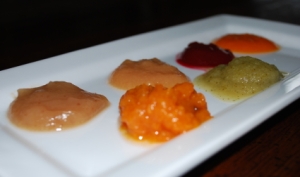
I don’t think most moms realize how easy it is to make your own baby food.
Think of the money saved! Plus, you control the ingredients and know exactly what your little bundle o’ joy is eating.
Want to start with green peas? No problem. Cook peas as normal. Put them in the blender – add a little of the cooking water, breastmilk or formula. Blend until smooth. Buy little containers or use ice cube trays to store and freeze. When you are ready to use, thaw and serve or briefly warm in the microwave.
Done!
Apples, carrots, spinach – any other fruit or vegetables your baby likes – exact same process! I bought a butternut squash and peeled, cubed and roasted it and then pureed it with a little water. I had more then 10 servings that I could freeze.
Trust me, you will be amazed how easy this is – and you will save those last minute trips to the store as you are about to use up your very last jar of baby food. And to top it all off, the baby food tastes SO much better!
Here is a wonderful online resource for making baby food:
http://www.wholesomebabyfood.com/
Filed under: Budgeting, recipes | Tagged: Baby, budgets, food, home, Moms, money, recipes | 3 Comments »



 TheMotherList's Blog